CharDham Yatra Tour Package with TaxiYatri – Save 15% off
Chardham Yatra Packages
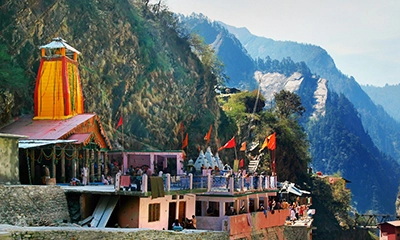
Yamunotri
The first stop in the Chardham Yatra, dedicated to Goddess Yamuna.
📍 Altitude: 3,291 m
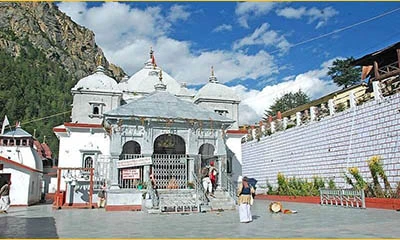
Gangotri
The highest temple dedicated to Goddess Ganga, the source of the river.
📍 Altitude: 3,100 m
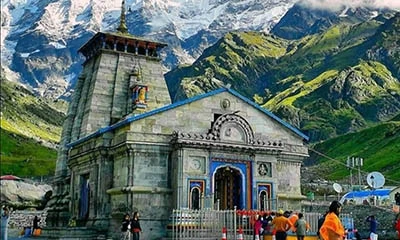
Kedarnath
One of the twelve Jyotirlingas, dedicated to Lord Shiva.
📍 Altitude: 3,583 m
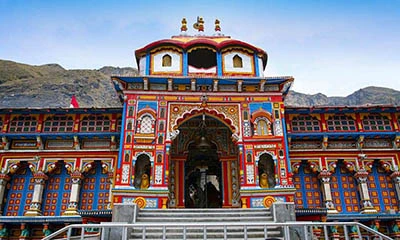
Badrinath
Dedicated to Lord Vishnu, located between the Nar and Narayana mountains.
📍 Altitude: 3,133 m
The literal translation of Char Dham Yatra in English is the tour of the four heavenly abodes of God. According
to Hinduism, completing the Chard Dham Yatra is the ultimate devotion one can offer to God. The Char Dham consists
of the four most sacred places of devotion according to the Hindu scriptures namely the Kedarnath Temple, the
Badrinath Temple, Gangotri, and Yamunotri. All these four temples are located in the state of Uttarakhand and
completing the visit to each of these temples in one single trip is termed as the Char Dham Yatra. Each one of
these four temples have a unique legendary tale behind them.
One can even feel loads of positive energy and powerful
vibes while visiting these places of sacredness. For a long time, the Char Dham Yatra was possible to be completed
only by sages, saints, and those devotees who had completely surrendered themselves to the Almighty. This was
because of the harsh weather conditions and almost no infrastructure availability at these temples. But in recent
times, the Government of India has taken many steps to build connectivity and infrastructure in this area so that
people from all walks of life can complete visiting the Char Dham Yatra. It is a famous belief that on completion
of the Char Dham Yatra, every devotee will attain moksha and nirvana from the cycle of birth and rebirth, that is
the devotee will attain salvation and rise above the worldly needs. There are various commuting and tour package
offers available for the Char Dham Yatra by TaxiYatri. These Char Dham Yatra packages usually have the starting
point as Delhi and help you complete the whole yatra in a comfortable and relaxed manner without any hassles and
tensions.
Chardham Yatra Tempo Traveller Fare Information
Delhi to Chardham Yatra Taxi Fare:
| No. of Person |
Vehical Type |
Car Rates |
Book Here |
| 04 |
Sedan (Tata Indigo / Swift Dzire) |
INR 5000/- Per Day |
Call Now |
| 06 |
Innova, Xylo, Tavera |
INR 6700/- Per Day |
Call Now |
| 08 |
Tempo Traveller (12 Seater) |
INR 10500/- Per Day |
Call Now |
| 14 |
Tempo Traveller (14 Seater) |
INR 11500/- Per Day |
Call Now |
| 16 |
Tempo Traveller ( 16 Seater) |
INR 11800/- Per Day |
Call Now |
Haridwar to Chardham Yatra Taxi Fare:
| No. of Person |
Vehical Type |
Car Rates |
Book Here |
| 04 |
Sedan (Tata Indigo / Swift Dzire) |
INR 4700/- Per Day |
Call Now |
| 06 |
Innova, Xylo, Tavera |
INR 6400/- Per Day |
Call Now |
| 08 |
Tempo Traveller (12 Seater) |
INR 11200/- Per Day |
Call Now |
| 14 |
Tempo Traveller (14 Seater) |
INR 11200/- Per Day |
Call Now |
| 16 |
Tempo Traveller ( 16 Seater) |
INR 11200/- Per Day |
Call Now |
Char Dham Yatra Legends
Legend Behind Yamunotri Temple
The temple of Yamunotri is situated in the Uttarkashi district of Uttarakhand and was built by the Emperor Naresh
Shah of the Tehri Reign in the year 1839. According to all the packages of Char Dham Yatra, the temple which is
visited and worshipped first is the Yamunotri Dham. The Yamunotri Temple is dedicated to the second most sacred
river of India – the river Yamuna. Yamunotri is basically the inititation point of this river and is considered to
be one of the most pious and religious spots according to Hinduism. Along with Goddess Yamunotri, there is also an
idol of Goddess Gangotri which is worshipped at the Yamunotri Dham. There are several natural hot springs near
Yamunotri where devotees boil potatoes and rice which are offered to the Goddess as a part of the worship and
later eaten by the devotees in the form of blessings. According to mythology, Yamuna is the daughter of Lord Surya,
and also the twin sister of Lord Yama. It is believed that Saint Asit Muni used to regaularly bathe in the waters
of Ganga, but with time and age he could no longer visit the Ganges. Thus, as a blessing to her devotee, Ganga
started another stream of river accessible to Saint Asit Muni which is now called as Yamuna. The point of origin
of this stream is the location where the Yamunotri Dham is located.
Legend Behind Gangotri Temple
Located in the Uttarkashi district of Uttarakhand, the temple of Gangotri Dham was built by the Gurkha General
Amar Singh Thappa in the first half of the 19th century. The Gangotri Dham is the second place where you worship
in the Char Dham Yatra. Gangotri Dham is believed to be the abode of Goddess Ganga who had to come down on earth
from the Heavens to eradicate the sins and wrong-doings of the people on Earth. The river Ganga is considered to
be the most pious river in India. The river Ganga initiates at Gaumukh which is on the Gangotri Glacier at almost
a distance of 25 kilometers away from the main point of Gangotri Dham. Mythologically, Lord Sagar, the God of the
Seas had started a holy ritual called Ashwamedh for which he had sent his 60,000 sons along with a horse of a rare
breed. During this journey, the horse lost its track and was later seen at the abode of Saint Kapila. Having seen
the horse inside the ashram, all the 60,000 sons of Lord Sagar entered the place in a bad temper. Unfortunately
for them, at that time Saint Kapila was in a state of deep meditation which was disturbed because of their coming.
In a fit of rage, Saint Kapila converted all the 60,000 sons of Lord Sagar into ashes for disturbing his meditation
ritual. On calming down after sometime, Saint Kapila requested Lord Anshuman to request Goddess Ganga to help him
attain salvation, but Goddess Ganga did not pay a heed to it. His following generation, Saint Bhagirath continued
the meditation process on which Goddess Ganga was extremely satisfied and decided to come down to Earth from the
Heavens to help the 60,000 sons of Lord Sagar attain salvation. It is duely believed that Lord Shankar weaved the
river Ganga in his dreadlocks as it was feared that the force of the waters of river Ganga would have wiped out
the entire earth.
Legend Behind Kedarnath Temple
Kedarnath can easily be said to be the toughest and the most inaccessible temple of the Char Dham Yatra. It is usually
the Third Dham which is worshipped in the entire Char Dham Yatra. It is said to be built by the five Pandava brothers
and was re constructed by Sage Adi Shankaracharya in the early 8th century. The Kedarnath Temple is said to be a fine
example of an architecture marvel as this construction which is completely built in grey sand stone has faced and
stood strong against all the tests of time and weather. The terrain in which this temple is built is extremely harsh.
According to the legendary tale, the five Pandava Brothers were in search of Lord Shiva to help them get eradicated
and forgiven from all their sins they have committed during the war of Mahabharata. But before granting them this
forgiveness Lord Shiva wanted to test the Pandava Brothers. Thus, He transformed himself into a bull and deported
himself to the Garhwal region of the Himalayas. The Pandava brothers being honest in their attempts found Lord
Shiva in the bull incarnation. Being satisfied with their devotion, it is believed that Lord Shiva jumped like
a ball and divided himself into five different parts of the bull, namely, the hair of the bull at Kapaleshwar,
the hump of the bull at Kedarnath, the arms at Tunganath, the face of the bull at Rudranath, and finally the
navel at Madhya Maheshwar. It is said that the Pandava brothers together unitedly built five different temples
at these five spots which are now prominently known as Pancha Kedar collectively.
Legend Behind Badrinath Temple
Badrinath is the last stop of the Char Dham Yatra and is considered to be the most pious temple for the Hindus. It is
dedicated to Lord Badri, another name of Lord Vishnu and is at the apex of the 108 holiest places of the Hindu pilgrimage.
Coincidentally, the Badrinath Dham is a part of the Char Dham as well as the Chota Char Dham Yatra. The idol worshipped
in the Badrinath Dham was found by Sage Adi Shankaracharya and in order to safeguard this idol he kept in the Tapt
Kund. After many years, this idol was recovered by the Garhwal Emperor in the 16th century. Respecting the sentiments,
the first Badrinath Temple was built by him in the following years. Due to harsh terrains, the temple of Badrinath
was demolished a numerous time, but with the blessings of the Lord the temple is re-erected with enthusiasm every
time. Location wise, the Badrinath Temple is located in between the Mountain Nar and Mountain Narayan. The scenic
Mount Neelkanth as the backdrop, makes the Badrinath Temple an attractive location for the devotees to come. The
mythological tale behind the Badrinath Temple is that, a sage had pinpointed to Lord Vishnu about he living a life
of glory and enjoyment. Thus, to eradicate his sins, Lord Vishnu started meditating at the precise location where
the current Temple of Badrinath is built. As a responsible wife, Goddess Lakshmi transformed herself into a berry
tree to protect Lord Vishnu from all the natural distractions like that of sun and snow during his penance.
CHARDHAM YATRA OPENING & CLOSING DETAILS:
| Opening Dates of Chardham Yatra for 2023 |
Closing Dates of Chardham Yatra for 2023 |
Book Here |
| Yamunotri Temple – 19 April 2026 |
Yamunotri Temple – 11 November 2026 (Tentative) |
Call Now |
| Gangotri Temple – 19 April 2026 |
Gangotri Temple – 10 November 2026 (Tentative) |
Call Now |
| Kedarnath Temple – 22 April 2026 |
Kedarnath Temple – 11 November 2026 (Tentative) |
Call Now |
| Badrinath Temple – 23 April 2026 |
Badrinath Temple – 13 November 2026 (Tentative) |
Call Now |
Chardham Yatra Taxi Package Fare From Haridwar and Delhi Ex
| No. of Person |
Economic Package (Per Person Ex Delhi) |
Standard Package (Per Person Ex Delhi) |
Standard Package(Per Person Ex Haridwar) |
Book Here |
| 02 |
INR 29500 (with Sedan Car) |
INR 34200 (with Sedan Car) |
INR 23000 (with Sedan Car) |
Call Now |
| 03 |
INR 23800 (with Sedan Car) |
INR 26966 (with Sedan Car) |
INR 18266 (with Sedan Car) |
Call Now |
| 04 |
INR 23500 (with Innova Car) |
INR 27000 (with Innova Car) |
INR 17750 (with Innova Car) |
Call Now |
| 05 |
INR 20800 (with Innova Car) |
INR 24100 (with Innova Car) |
INR 15960 (with Innova Car) |
Call Now |
| 06 |
INR 19500 (with Innova Car) |
INR 23000 (with Innova Car) |
INR 15166 (with Innova Car) |
Call Now |
| 07 |
INR 21500 (with Tempo Traveller) |
INR 24928 (with Tempo Traveller) |
INR 14257 (with Tempo Traveller) |
Call Now |
| 08 |
INR 20500 (with Tempo Traveller) |
INR 24000 (with Tempo Traveller) |
INR 16250 (with Tempo Traveller) |
Call Now |
| 09 |
INR 19333 (with Tempo Traveller) |
INR 22722 (with Tempo Traveller) |
INR 15422 (with Tempo Traveller) |
Call Now |
| 10 |
INR 18700 (with Tempo Traveller) |
INR 23200 (with Tempo Traveller) |
INR 15000 (with Tempo Traveller) |
Call Now |
| 11 |
INR 18090 (with Tempo Traveller) |
INR 24818 (with Tempo Traveller) |
INR 15290 (with Tempo Traveller) |
Call Now |
| 12 |
INR 17500 (with Tempo Traveller) |
INR 21000 (with Tempo Traveller) |
INR 14166 (with Tempo Traveller) |
Call Now |
| 13 |
INR 17846 (with Tempo Traveller) |
INR 21269 (with Tempo Traveller) |
INR 13753 (with Tempo Traveller) |
Call Now |
| 14 |
INR 17500 (with Tempo Traveller) |
INR 21000 (with Tempo Traveller) |
INR 13571 (with Tempo Traveller) |
Call Now |
| 15 |
INR 17500 (Innova or Tempo Traveller) |
INR 20433 (Innova or Tempo Traveller) |
INR 14586 (Innova or Tempo Traveller) |
Call Now |
| 16 |
INR 17000 (Innova or Tempo Traveller) |
INR 21750 (Innova or Tempo Traveller) |
INR 14375 (Innova or Tempo Traveller) |
Call Now |
| 17 |
INR 17764 (Innova or Tempo Traveller) |
INR 21205 (Innova or Tempo Traveller) |
INR 14047 (Innova or Tempo Traveller) |
Call Now |
| 18 |
INR 17500 (Innova or Tempo Traveller) |
INR 21555 (Innova with Tempo Traveller) |
INR 13888 (Innova or Tempo Traveller) |
Call Now |

 8377-809-809
 WhatsApp Chat


 9818022467
 info@taxiyatri.com
