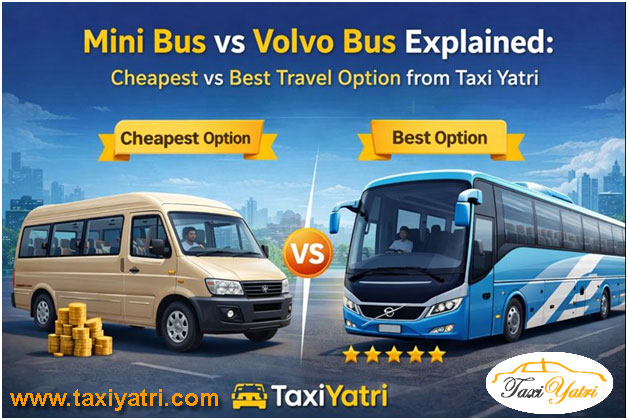
3 months ago, my office organized a Goa trip for 100 employees. The finance team wanted a small bus that is going to be – cheap and practical. The HR head insisted on Volvo buses – premium, comfortable. They ended up spending two days arguing over spreadsheets before someone actually called TaxiYatri and asked for real numbers. Mini Bus vs Volvo Bus Travel Option.
Turned out? For their specific trip – 600 kilometers, two days, mixed age group – the Volvo made more sense despite the higher price tag. Why? Because when you factor in comfort, fewer stops, happier employees, and the reduced risk of people calling in sick the next day from backaches, that extra money actually saved them headaches.
But here’s the thing – for a different trip with different people, the mini bus would’ve been the smarter choice.
So which one should you book? Let’s break this down without the corporate jargon or sales pitches. Just real talk about real vehicles for real trips.
Mini Bus vs Volvo Bus Travel Option: Which Travel Option Is Right for You?
What Exactly Are We Comparing?
Before we dive into numbers and comfort levels, let’s get clear on what we’re actually talking about.
Mini Bus – The Middle Ground Option
A mini bus isn’t a tempo traveller that grew up, and it’s not a full-size bus that shrunk. It’s its own category. Think of it as a bridge between group vans and proper luxury coaches.
Seating: Typically 17 to 35 passengers depending on the model
Common makes: Eicher, Tata, Ashok Leyland, BharatBenz
What it looks like: Regular bus design but smaller. You’ll recognize it immediately – it’s what most schools use for excursions or what you see companies deploying for employee shuttles.
Volvo Bus – The Premium Experience
When people say “Volvo bus,” they’re usually talking about the Swedish manufacturer’s luxury coaches. But here’s what most people don’t know – not every big comfortable bus is a Volvo. The brand just became synonymous with luxury bus travel in India.
Seating: Usually 40-55 passengers in seating config, 36-40 in sleeper
Common models: Volvo 9400, 9600 series are most popular
What sets it apart: That suspension system. Seriously, it’s like floating on a cloud compared to regular buses. Plus the interiors, the AC, the overall build quality.
The Real Cost Breakdown
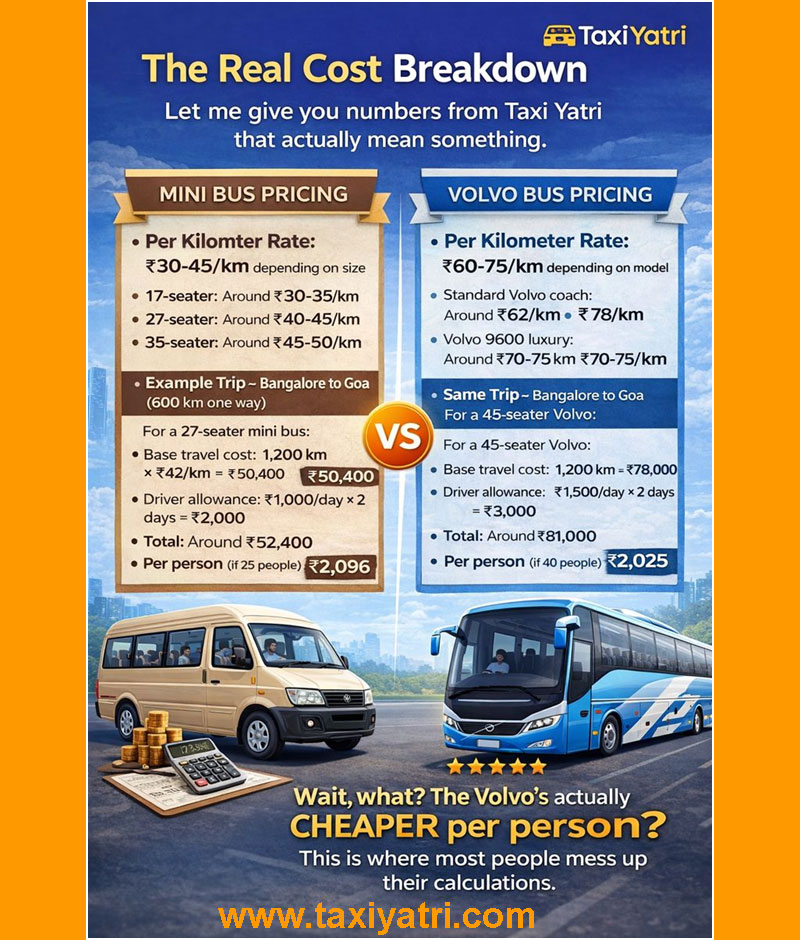
Let me give you numbers from TaxiYatri that actually mean something.
Mini Bus Pricing
Per Kilometer Rate: ₹30-45/km depending on size
- 17-seater: Around ₹30-35/km
- 27-seater: Around ₹40-45/km
- 35-seater: Around ₹45-50/km
Example Trip – Bangalore to Goa (600 km one way)
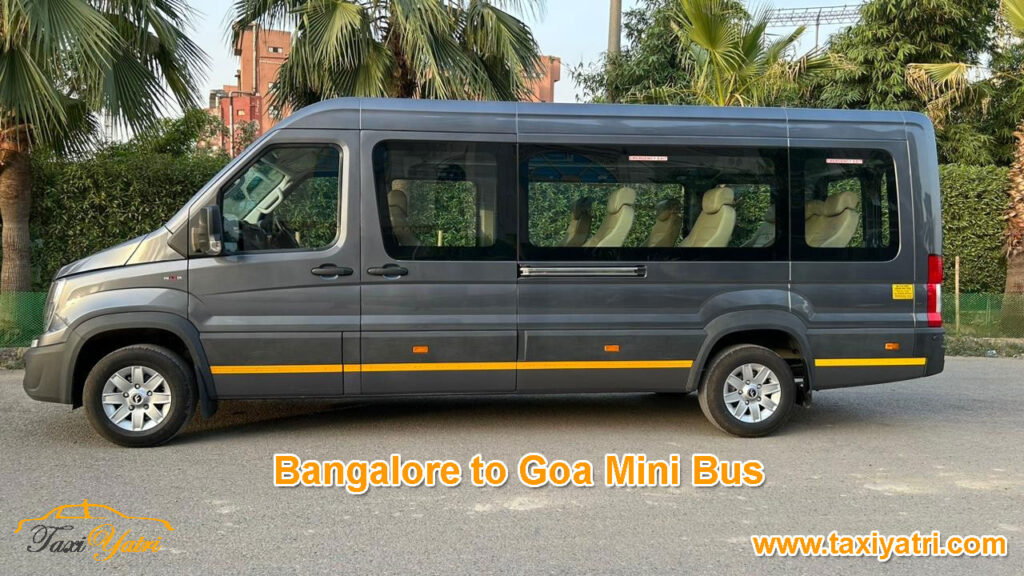
For a 27-seater mini bus:
- Base travel cost: 1,200 km × ₹42/km = ₹50,400
- Driver allowance: ₹1,000/day × 2 days = ₹2,000
- Total: Around ₹52,400
- Per person (if 25 people): ₹2,096
Volvo Bus Pricing
Per Kilometer Rate: ₹60-75/km depending on model
- Standard Volvo coach: Around ₹62/km
- Volvo 9600 luxury: Around ₹70-75/km
Same Trip – Bangalore to Goa
For a 45-seater Volvo:
- Base travel cost: 1,200 km × ₹65/km = ₹78,000
- Driver allowance: ₹1,500/day × 2 days = ₹3,000
- Total: Around ₹81,000
- Per person (if 40 people): ₹2,025
Wait, what? The Volvo’s actually CHEAPER per person? This is where most people mess up their calculations.
The Hidden Math Everyone Ignores
My cousin booked a mini bus for 18 people thinking she’d save money. She did the ₹35/km calculation, felt smart. Then reality hit.
What she didn’t factor in:
The mini bus needed lunch stops because people got cramped. That added an hour. Some folks got motion sick on the winding ghat roads – mini buses have regular suspension. They had to stop twice more. The AC wasn’t powerful enough for afternoon heat with 18 people packed in. Windows had to be opened, which meant dust and noise.
Total extra time? Almost 2.5 hours. People arrived tired and grumpy. Not exactly the start to a celebration she’d planned.
Here’s what actually matters:
When Mini Bus Wins
Shorter distances (under 300 km)
For trips like Bangalore to Mysore (150 km), Bangalore to Nandi Hills (60 km), Delhi to Agra (230 km) – a mini bus works perfectly. You’re not in there long enough for comfort differences to become deal-breakers.
My office books a 20-seater mini bus from TaxiYatri every month for Nandi Hills. Two-hour journey, nobody complains. Why pay extra for Volvo comfort you won’t really need?
Smaller groups (15-25 people)
If you’re not filling up a big Volvo bus, the math swings back toward mini buses. A Volvo needs around 35-40 people to make per-person costs sensible. With just 18 people in a 45-seater Volvo, you’re paying for empty seats.
Better to book a 20-seater mini bus. Everyone’s seated comfortably, costs stay reasonable.
Budget trips
Look, sometimes money’s genuinely tight. College trips, small NGO outings, community picnics – not every group can afford premium transport. A mini bus lets you actually make the trip happen instead of canceling because Volvo prices don’t fit the budget.
City navigation
Mini buses handle narrow city streets better. For local events, weddings where you’re moving between venues in congested areas, or temple circuits with tight parking, smaller vehicles make life easier.
Try squeezing a full-length Volvo into old city parking lots. I’ve seen it attempted. It’s not pretty.
When Volvo Bus Makes Sense
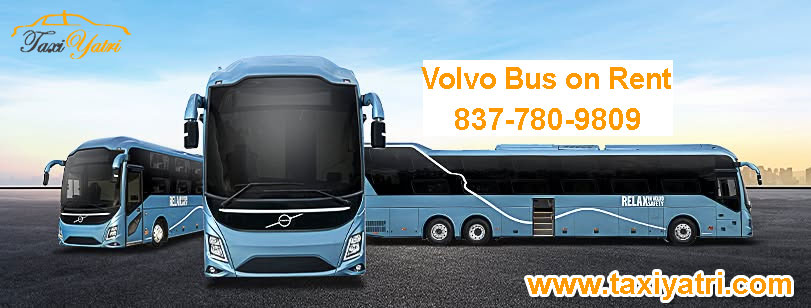
Long-distance journeys (500 km+)
Anything over 500 kilometers? Volvo becomes worth it. My brother’s company learned this the expensive way. They booked mini buses for a Mumbai-Goa corporate outing (600 km). People arrived so exhausted that the first day of the retreat was basically wasted with everyone recovering.
Next year? They booked Volvo coaches through TaxiYatri. Same route, people arrived fresh, ready to participate. The HR head said the difference in energy levels alone justified the extra ₹15,000.
Overnight travel
If your journey involves sleeping, there’s no contest. Volvo sleeper buses have lie-flat berths. Mini buses have seats that recline maybe 30 degrees if you’re lucky.
I once took a mini bus for an overnight trip thinking I’d tough it out and save money. Arrived with a neck crick that lasted three days. Never again.
Elderly passengers or families with kids
My parents are in their 60s. Regular bus suspension feels like a punishment to them on longer trips. Volvo’s air suspension system? They actually relax, sometimes even nap.
Same with families traveling with young children. The smoother ride means less crying, less motion sickness, less stress for everyone.
When image matters
Corporate events, wedding guest transport, high-profile group bookings – sometimes the vehicle itself makes a statement. Rolling up in a Volvo coach looks professional. It tells clients or guests that they’re valued.
My friend’s wedding had Volvo buses for guest transport. People talked about it. Small detail, big impression.
The Comfort Factor
The brochures of the company throw around terms like “luxury seating” and “premium comfort.” Lets explain with actual experience.
Mini Bus Reality
Seats: Basic cushioning. Push-back recline exists but limited – maybe 25-30 degrees max. After three hours, you’re shifting around looking for a position that doesn’t hurt.
Legroom: Acceptable for people up to 5’8″. If you’re taller or have long legs, prepare for knee discomfort. I’m 5’10” and mini bus legroom feels cramped on trips over two hours.
Suspension: Standard. You feel road bumps. Not terrible on highways, but on rough patches or ghats, everyone’s bouncing together. Motion sickness becomes a real issue for some people.
Luggage: Limited overhead space. Most bags go in a small boot area at the back. Forget carrying extra shopping bags unless you want them on laps.
Noise levels: Engine noise is noticeable. People need to raise voices slightly for conversations. That travel documentary you wanted to watch on your laptop? You’ll be maxing out the volume.
Volvo Bus Reality
Seats: Genuinely comfortable cushioning. Push-back recline goes to about 45-50 degrees in seating config. Sleeper berths lie completely flat with decent mattressing. I’ve actually slept properly in Volvo sleepers, not just dozed uncomfortably.
Legroom: Generous. Tall folks can stretch out. Nobody’s knees are touching the seat in front. Makes a massive difference on 8-hour journeys.
Suspension: This is THE difference. Volvo’s air suspension genuinely smooths out roads. You know those speed bumps that jolt you in regular vehicles? You barely notice them in a Volvo. Ghat road curves? Smooth sailing.
AC: Powerful, zoned, actually works. Even in peak summer with a full bus, the AC keeps everyone comfortable. Climate control maintains steady temperature. No need for windows.
Luggage: Substantial overhead bins plus large dedicated luggage holds. Everyone gets proper space. Those souvenir shopping sprees don’t become packing nightmares.
Noise levels: Remarkably quiet. Double-glazed windows, sound insulation, quieter engines. You can have normal conversations without raising your voice. That movie? Perfect audio at reasonable volume.
Entertainment: Many Volvo buses from TaxiYatri come with entertainment systems – LCD screens, USB charging ports, sometimes even Wi-Fi. Mini buses? You’re lucky if the FM radio works.
Group Size Sweet Spots
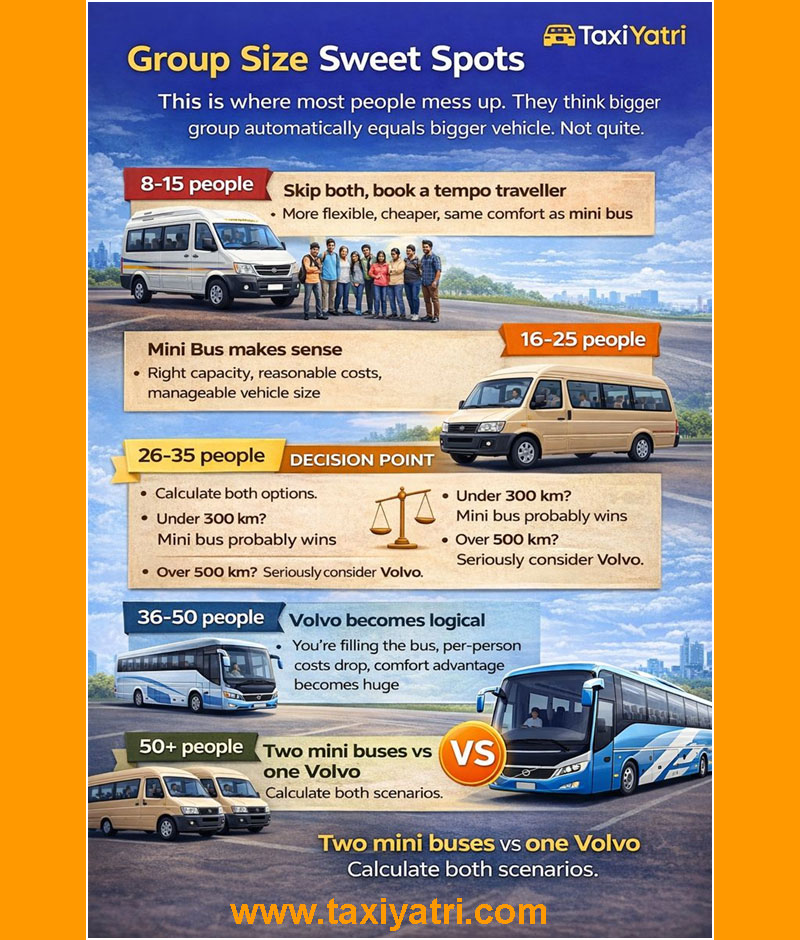
This is where most people mess up. They think bigger group automatically equals bigger vehicle. Not quite.
8-15 people → Skip both, book a tempo traveller More flexible, cheaper, same comfort as mini bus
16-25 people → Mini Bus makes sense Right capacity, reasonable costs, manageable vehicle size
26-35 people → Decision point Calculate both options. Under 300 km? Mini bus probably wins. Over 500 km? Seriously consider Volvo.
36-50 people → Volvo becomes logical You’re filling the bus, per-person costs drop, comfort advantage becomes huge
50+ people → Two mini buses vs one Volvo Calculate both scenarios.
The Booking Process with TaxiYatri
What TaxiYatri Handles Well
Pricing: They break down costs very clearly. The driver charges, per km. No surprise bills at the end.
Vehicle Options: They maintain both mini buses and Volvo coaches. So when you call, they’ll actually help you figure out which makes sense for your specific trip instead of pushing whichever earns them more.
Driver Quality: This matters more than people realize. Professional drivers maintain schedules – TaxiYatri get their drivers properly.
GPS tracking: It is great for business reservations or family vacations. Throughout the trip, you may keep an eye on the vehicle’s whereabouts.
How to Actually Book
Call them or use their website. You’ll need:
- Travel dates
- Approximate group size
- Pickup location and destination
- Rough itinerary (same day return, overnight, multi-day)
They’ll give you advice on vehicle options with pricing for each. My tip? Be honest about your group composition. Elderly folks? Young kids? Tell them. They’ll recommend accordingly.
Advance booking timeframe:
If you want to make an advance booking, the time frame will be within 1-2 weeks ahead. But if it is peak season like October – february, the booking must be made 6-8 week advance.
Real Trip Scenarios – What Would you Choose?
Let me give you a real life situation and what makes sense.
Scenario 1: Office Team Outing to a place named Wonderla (50 people, covers 150 km round trip)
Choice: Mini bus
The mini bus saves ₹8,000-10,000 total. That money goes toward better lunch or extra activities. The comfort disadvantage barely matters for a 90-minute ride each way.
Scenario 2: Family Pilgrimage to Tirupati (22 people, 500 km round trip, two days)
My choice: Mini bus, but barely
Why: This is a toss-up honestly. The distance and elderly relatives make me want Volvo. But 22 people in a 45-seat Volvo feels wasteful. A 27-seater mini bus keeps costs reasonable (saves around ₹12,000) and still seats everyone comfortably enough. Key is choosing a newer mini bus model with decent AC and suspension.
Scenario 3: Going for a Corporate Conference to Goa (20 people, 1,200 km round trip, three days)

Vehicle choice: Volvo, no question
Why: It is enclosed by the distance alone. The increased comfort and image factor of the Volvo become critical when you take in several travel days, the requirement to arrive feeling professional, and the mix of upper management and younger personnel. For employee satisfaction, the cost difference per person drops to about 300 to 500 bucks.
Scenario 4: Transport for wedding guests (50 people, local sightseeing, 100 km total)
Vehicle choice: Mini bus
Why: You get multiple short trips, it bypasses city traffic and can be fine in tight venue parking. A full-size Volvo will be quite hard to maneuver.
Scenario 5: College Trip to the location called Hampi (37 students, 680 km round trip, four days)

Choice of vehicle: Volvo
Why: It is true that the students have a tight budget, but, when it comes to distance and duration the vehicle named Volvo is worth it. Also, students will enjoy the travel when it’s comfortable. They’ll remember the journey positively. Split among 35, the per-person premium is around ₹400-600 only. Totally manageable.
The Maintenance Factor Nobody Talks About
Here’s something that affects your journey but stays invisible until it becomes a problem: vehicle maintenance standards.
Mini Buses: TaxiYatri maintains their mini bus fleet decently. But understand that mini buses take more beating. They do more city runs, more frequent trips, deal with varied conditions. Wear and tear happens faster.
Check the vehicle before departure. Look at:
- Tire condition (should have good tread, no visible damage)
- AC functionality (turn it on, make sure it’s actually cold)
- Seat condition (push-back mechanism working?)
- Cleanliness (reflects overall maintenance attitude)
Volvo Buses: These cost ₹1.3-2 crore to purchase. Operators maintain them religiously because one breakdown costs enormous money. TaxiYatri’s Volvo fleet typically shows better maintenance records.
Still worth checking basics, but generally you’re looking at newer, better-maintained vehicles simply because of the investment involved.
Payment and Hidden Costs
The advertised per-km rate isn’t the final number. Here’s what actually gets added:
- This is what is really added:
- Included in Yatri Taxi Quotes
- Base fee per kilometer
- Allowance for drivers
- Simple fuel
- Upkeep of vehicles
- Extra Expenses (Usually Extra)
- Depending on the route, tolls may increase between ₹500 to ₹2,000.
- Parking costs range from ₹50 to 200 each stop.
- State-specific interstate permits which ranges from ₹500 to ₹1,500.
- Night costs for driversl ₹500–1,000 from 10 p.m.to 6 a.m
Pro tip: Get a written breakdown before booking. TaxiYatri provides the total estimated cost, including likely toll/parking charges. Prevents billing surprises later.
Final Thoughts
That argument between my uncle’s finance team and HR head? They should’ve just asked their actual employees. Would you rather we spend an extra ₹12,000 on Volvo comfort, or use that money for a better hotel/activities?
Sometimes the answer’s obvious. Sometimes it’s not.
TaxiYatri’s good about walking you through both options without pushing the pricier one automatically. But at the end of the day, you know your group better than any travel company. Age demographics, comfort expectations, budget realities, trip priorities – factor in what actually matters to YOUR specific situation.
And here’s something nobody tells you: The vehicle you choose affects group dynamics. Comfortable, rested travelers joke around more, complain less, participate better. Tired, cramped travelers get irritable, opt out of activities, remember the trip negatively.
That’s worth thinking about when ₹300-500 per person separates decent from great.

I’m a wanderer who loves venturing on to unknown and unseen places. I explore freely to various fun and adventurous places, whether it be spiritual temple tours, captivating landscapes, and more. I wonder around in search of hidden gems and tourist attractions, temples, and other places.